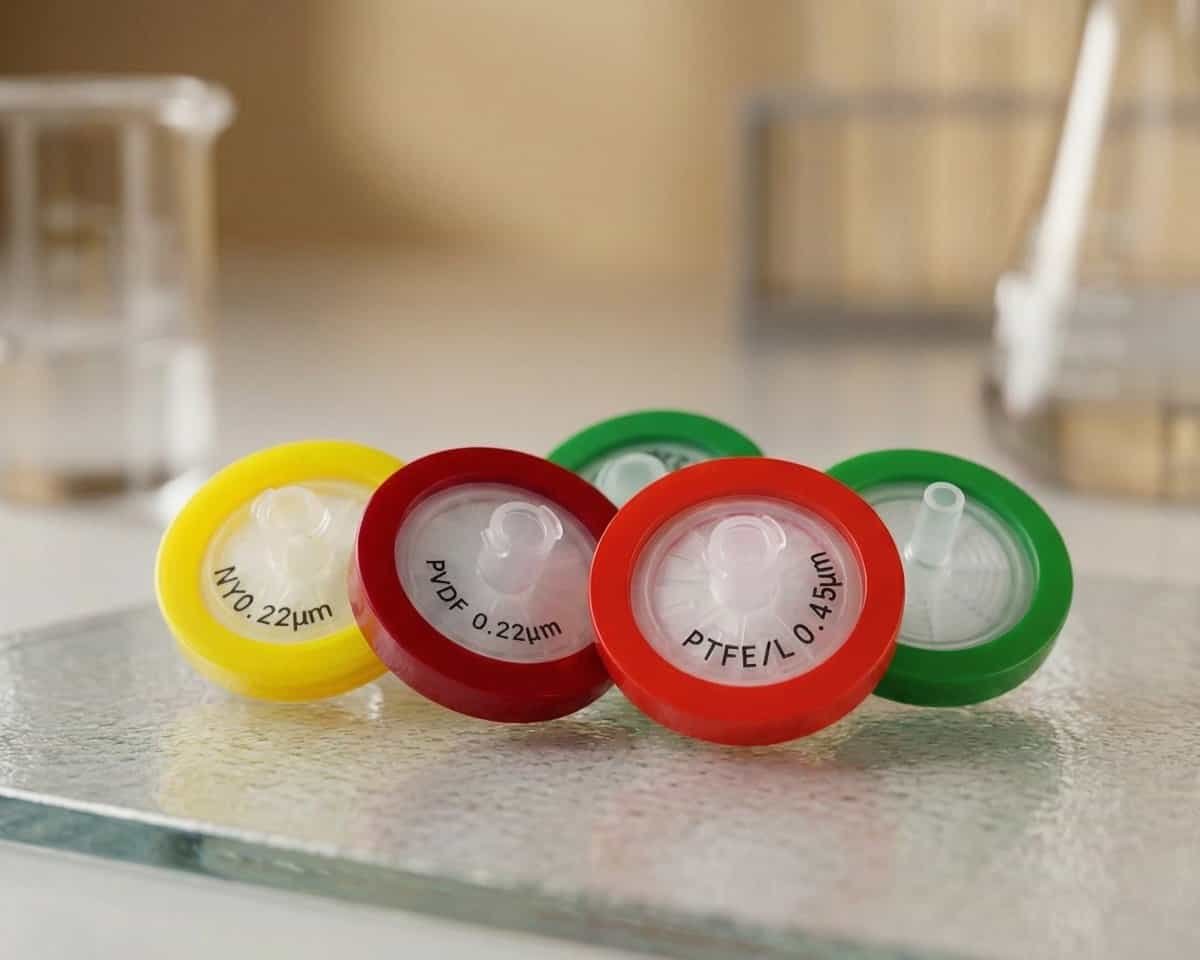
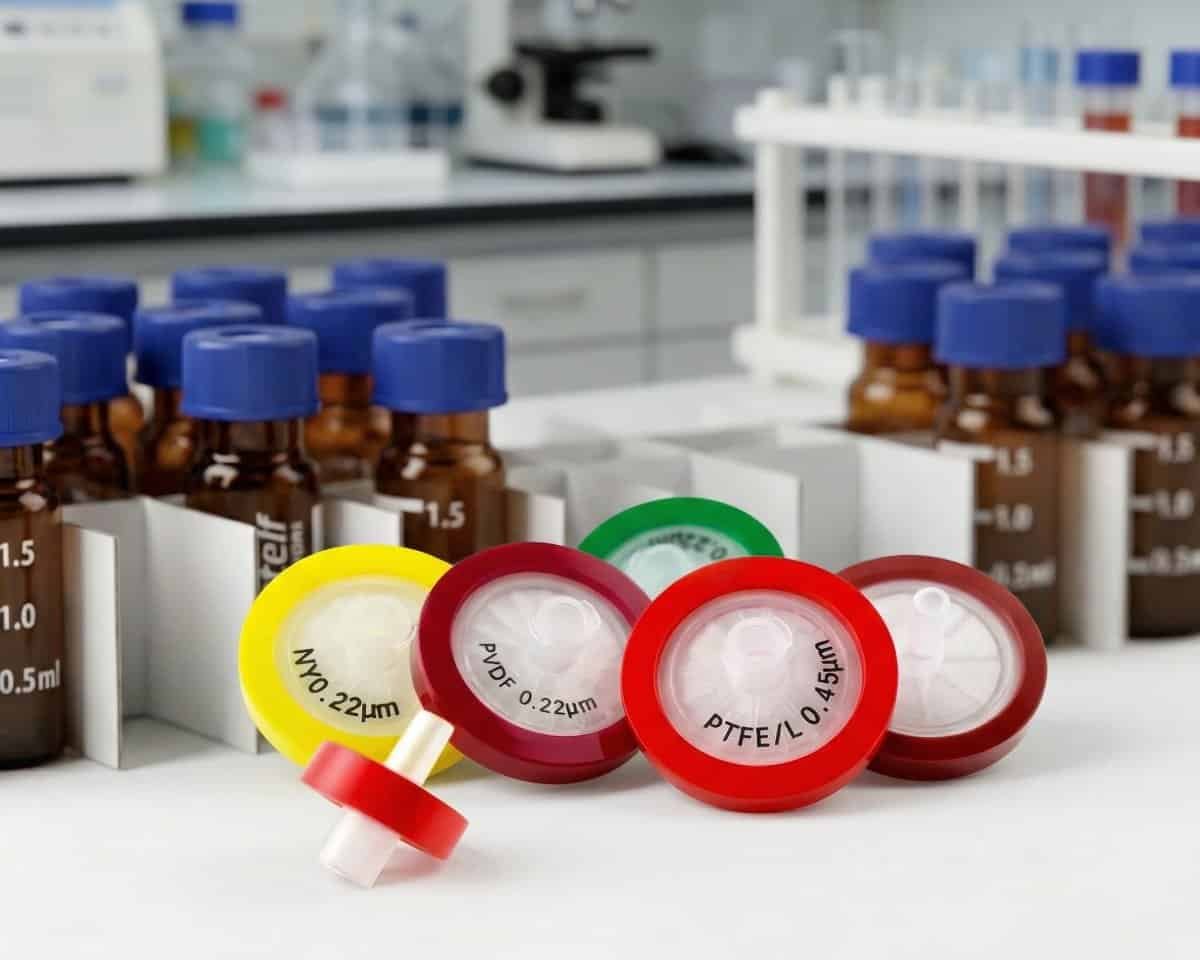
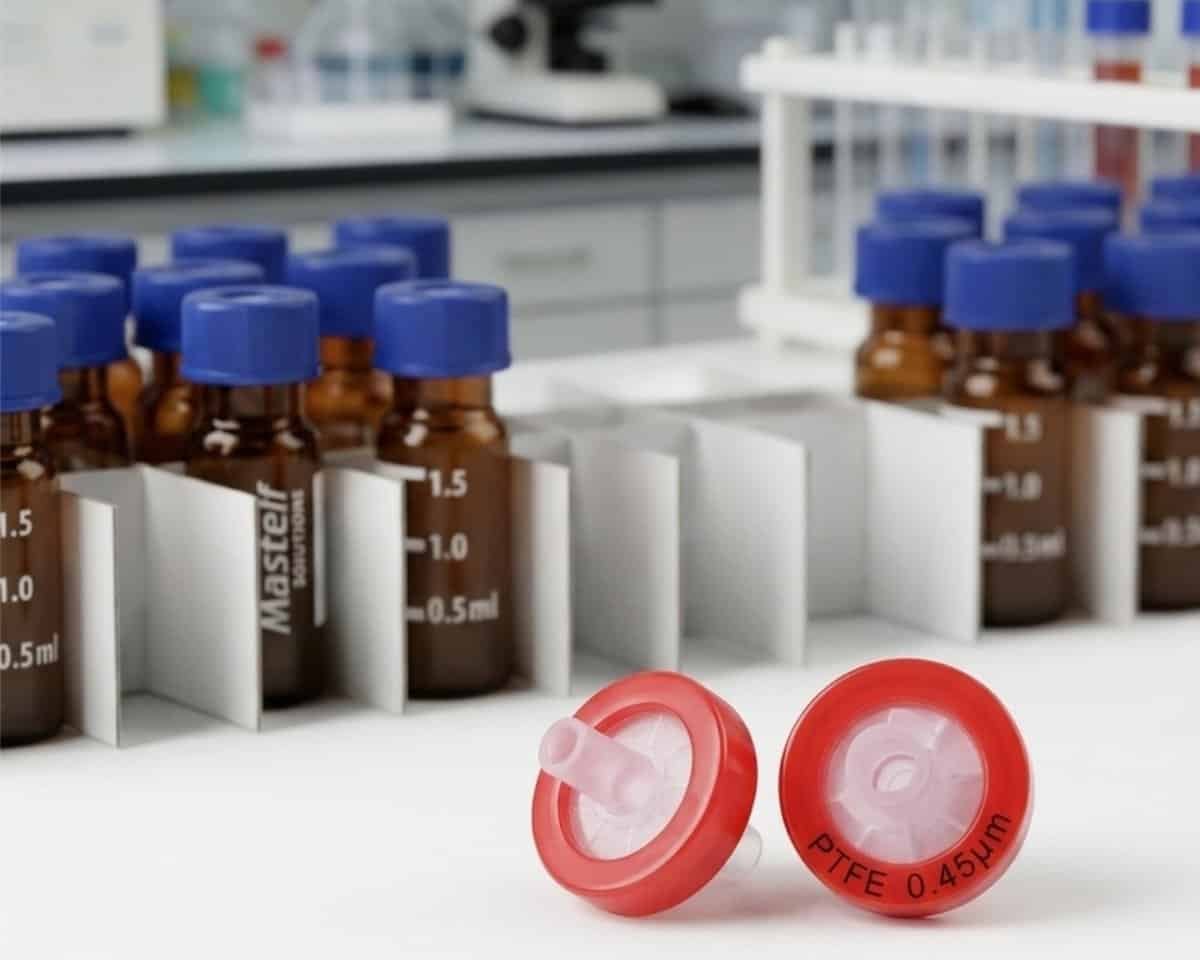
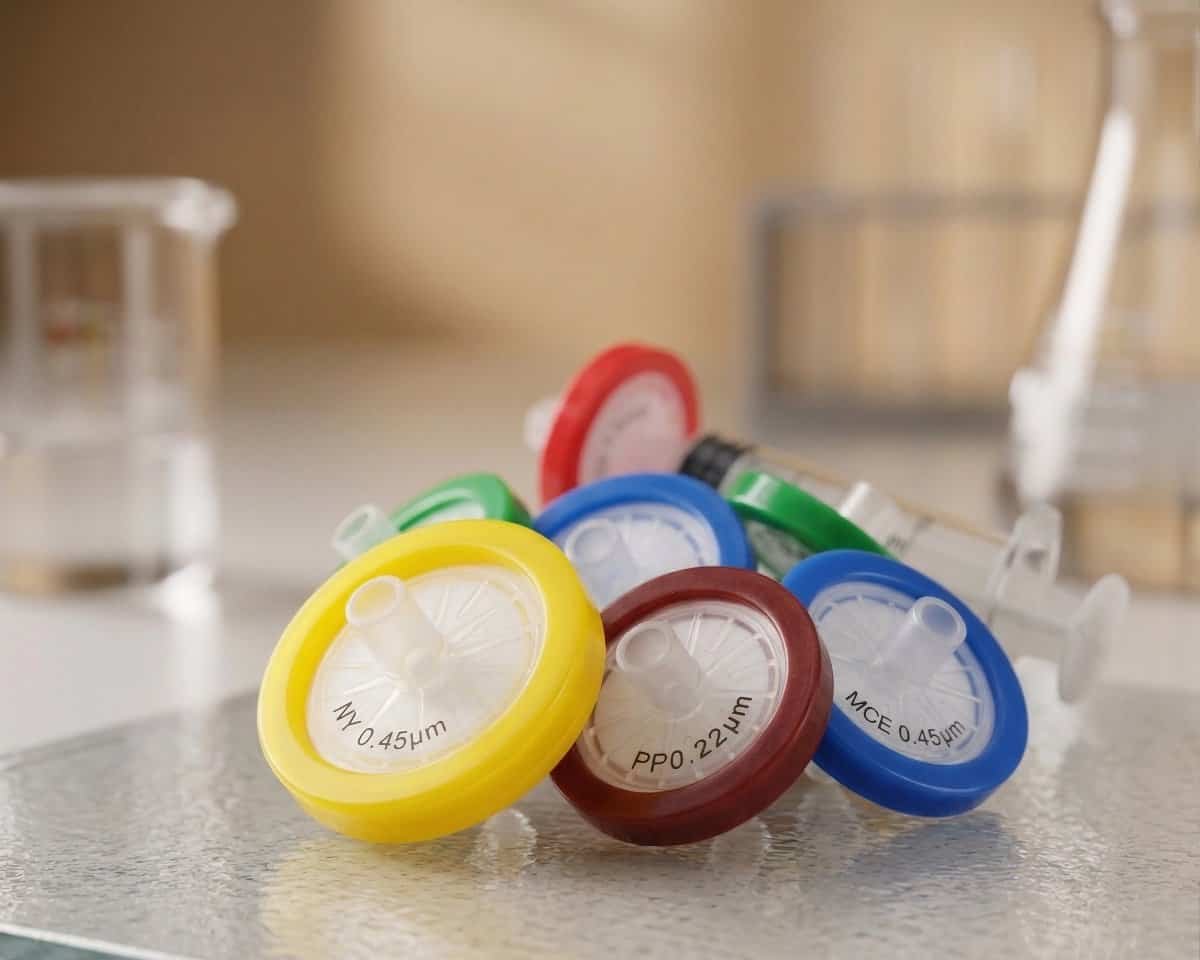
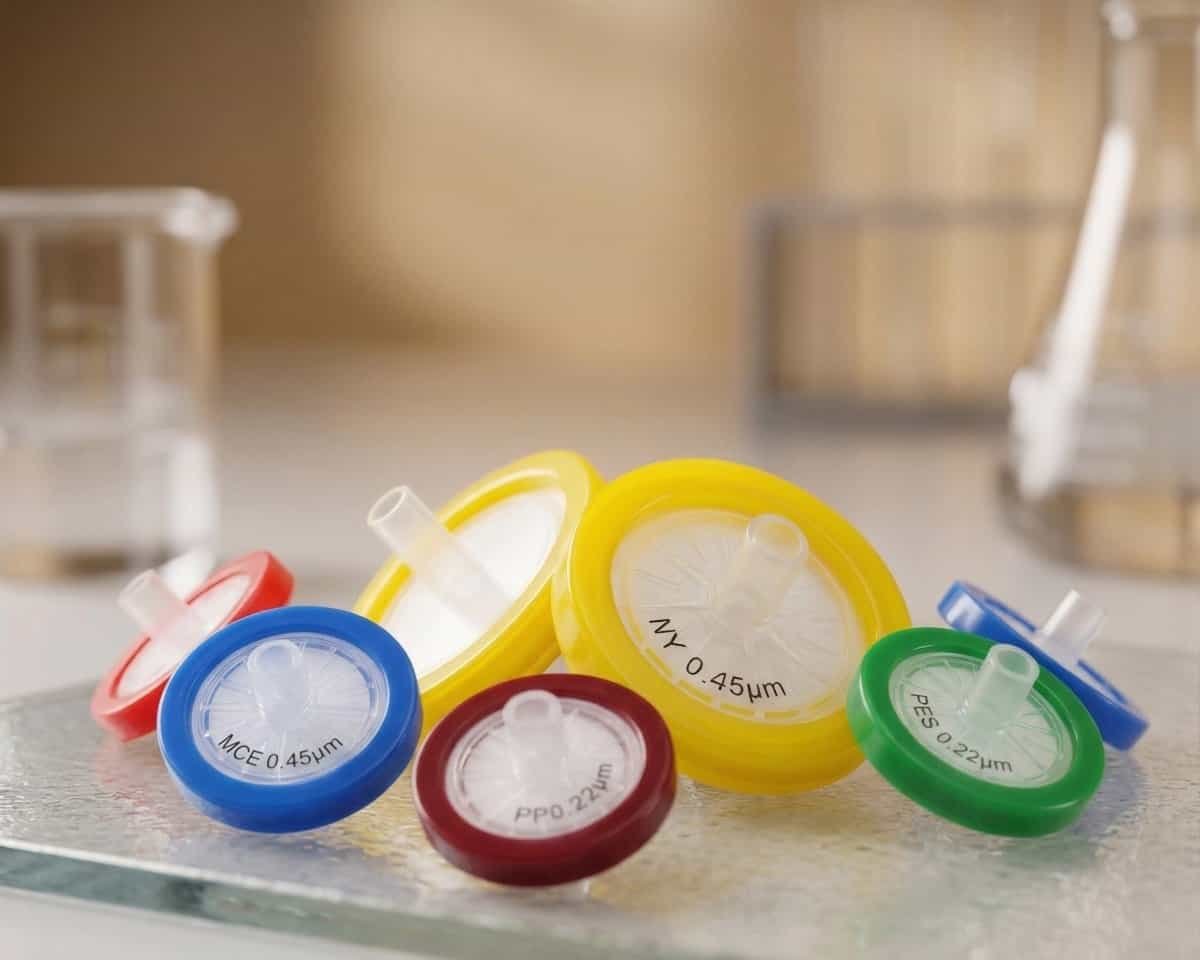
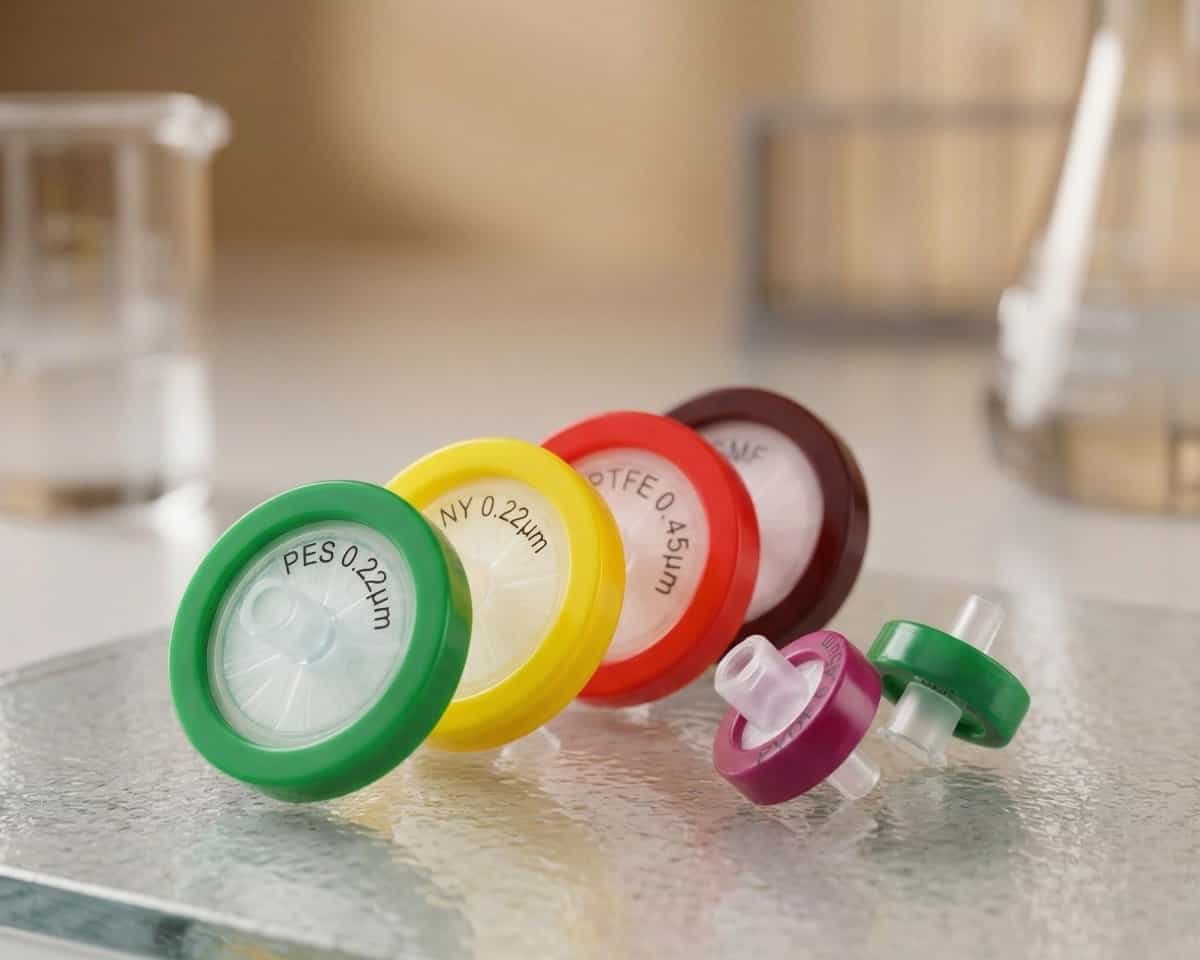
Our Mastelf Syringe Filters are designed for reliable sample preparation in HPLC, GC, LC-MS, and dissolution testing. These filters are single-use (disposable) and are used to remove particulate impurities from solvents and samples prior to analysis, ensuring stable and accurate analytical results.
Syringe filters play a critical role in chromatography workflows by preventing contamination, protecting analytical columns, and improving reproducibility. Our filters are manufactured using high-quality membrane materials and precise production processes to deliver consistent filtration performance.
Key Features
- Single-use disposable design
- Removes particulate impurities before analysis
- Suitable for HPLC, GC, LC-MS, dissolution testing
- Wide range of membrane materials available
- Available in hydrophilic and hydrophobic types
- Consistent pore size and filtration performance
- Compatible with standard syringes and autosampler workflows
Membrane Materials
Our syringe filters are available in multiple membrane types to meet different application requirements:
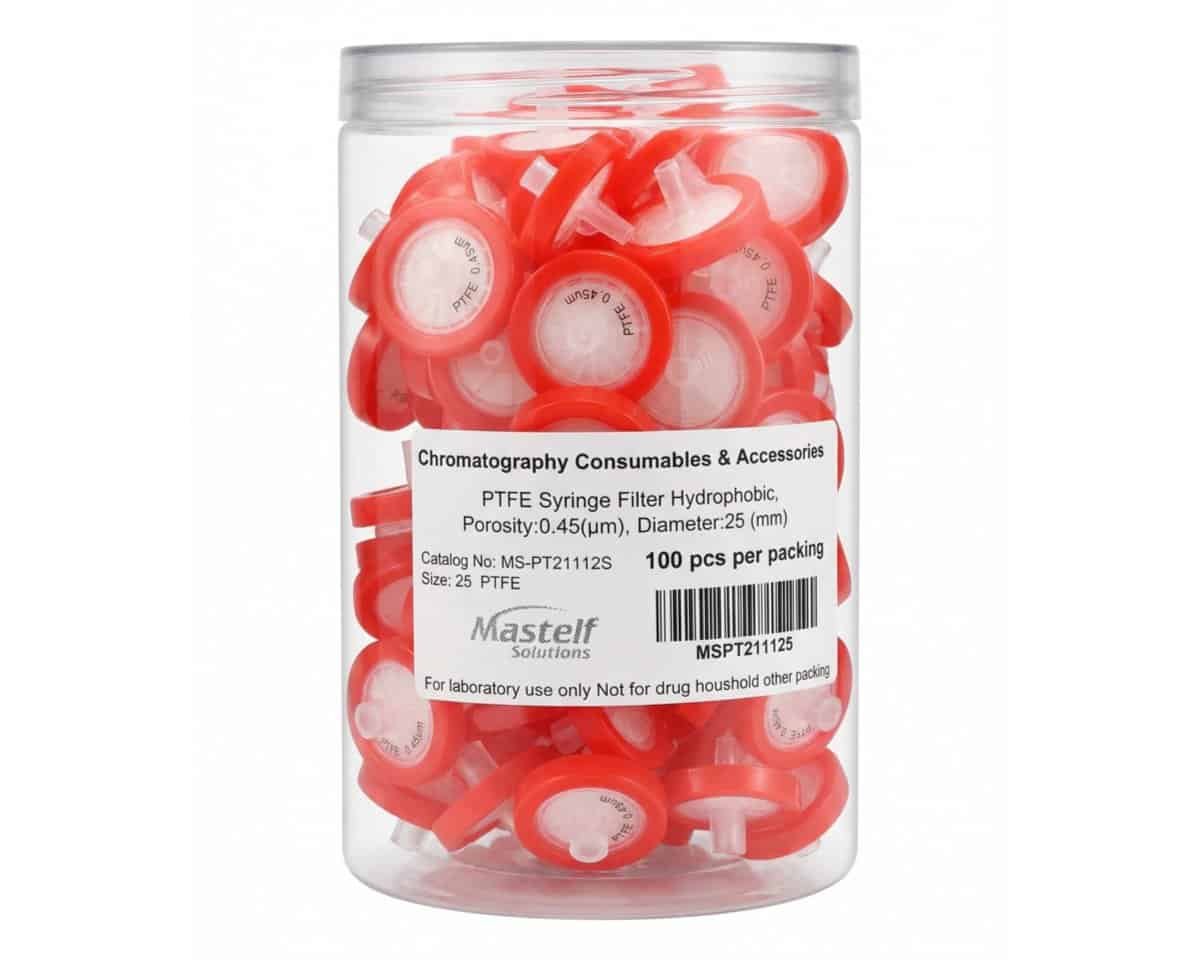
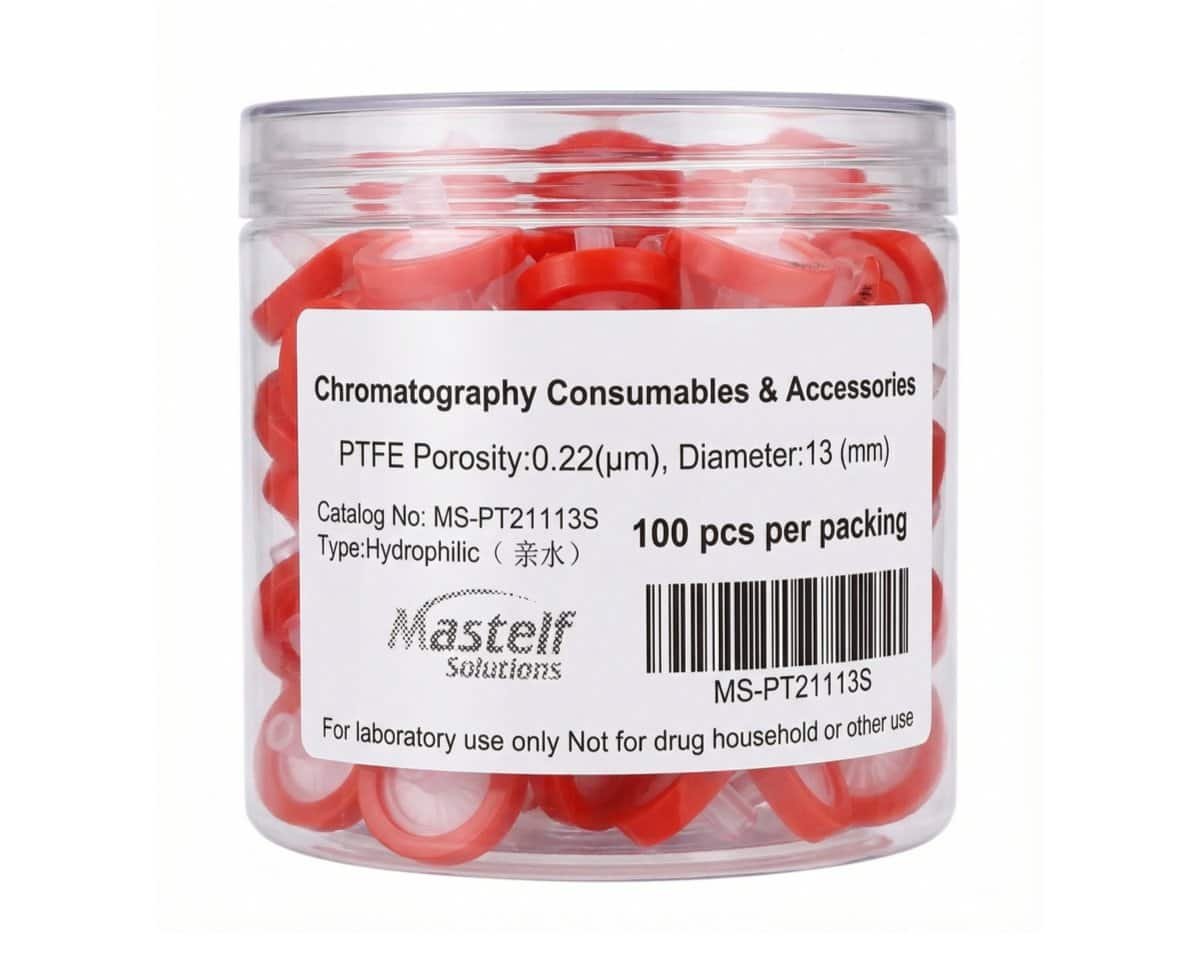
- PTFE (Polytetrafluoroethylene) – hydrophobic, ideal for organic solvents
- PP (Polypropylene) – general-purpose compatibility
- CA (Cellulose Acetate) – low protein binding, aqueous solutions
- PVDF (Polyvinylidene Fluoride) – low extractables, versatile
- PES (Polyethersulfone) – high flow rate, aqueous filtration
- RC (Regenerated Cellulose) – low binding, mixed solvents
- Nylon – strong and durable, suitable for many solvents
- MCE (Mixed Cellulose Ester) – suitable for aqueous solutions, commonly used in routine laboratory filtration applications
Syringe filters are widely used in HPLC sample preparation, helping achieve sample purification, concentration, and separation.
Hydrophilic vs Hydrophobic
Hydrophilic Filters
Hydrophilic membranes are water-attracting, allowing aqueous solutions to pass easily.
- Suitable for water-based samples
- Improve filtration efficiency in aqueous systems
- Used in water purification, medical applications, and chemical processing
Hydrophobic Filters
Hydrophobic membranes repel water and are mainly used for:
- Organic solvents
- Gas filtration applications
Choosing the correct membrane type depends on the sample polarity, solvent system, and analytical method.
Pore Size & Diameter
Filtration performance depends on:
- Pore size (e.g. 0.22µm, 0.45µm)
- Filter diameter (e.g. 13mm, 25mm)
Typical selection:
- 0.22µm → fine filtration / critical analysis
- 0.45µm → routine filtration
Example:
- 25mm filter → suitable for 1–2mL sample volume
Sterile vs Non-Sterile
- Sterile syringe filters
- Individually packed
- Suitable for direct sterile applications
- Non-sterile syringe filters
- Cost-effective
- Suitable for routine laboratory use
Selection depends on your sample processing requirements.
Operation Process
- Connect the syringe filter to a disposable or glass syringe
- Draw the sample into the syringe
- Attach the filter securely
- Push the plunger to filter the liquid
- Collect the filtered sample
Notes:
- Use a glass syringe ≥10 mL when possible to avoid excessive pressure
- High pressure may damage the membrane
- Always filter before injection to protect the system
Important Notes
- Laboratory use only
- Single-use, non-reusable
- Filtration helps reduce system contamination and protects columns
- Dead volume should be considered during sample preparation
Applications
Our syringe filters are widely used in:
- HPLC sample preparation
- GC analysis
- LC-MS / GC-MS workflows
- Dissolution testing
- Pharmaceutical analysis
- Environmental testing
- Food and beverage analysis
- Chemical processing
Why Choose Mastelf Syringe Filters?
At Mastelf, we focus on delivering high-quality alternatives to leading brands.
Our syringe filters are produced using:
- High-purity membrane materials
- Controlled manufacturing processes
- Stable pore structure and flow performance
This ensures:
- Reduced background interference
- Reliable filtration efficiency
- Consistent analytical results
FAQ
Q1: What is the purpose of a syringe filter?
Our syringe filters are used to remove particulate impurities before analysis, protecting instruments and improving data accuracy.
Q2: Which membrane should I choose?
Hydrophilic membranes are suitable for aqueous samples, while hydrophobic membranes are used for organic solvents.
Q3: What pore size should I use?
- 0.22µm for fine filtration
- 0.45µm for routine applications
Q4: Are your syringe filters sterile?
We offer both sterile and non-sterile options depending on application requirements.
Q5: Can syringe filters be reused?
No, our syringe filters are single-use disposable products.